Case Study
AI Assisted Workflow Automation.
Home
Resources
We saved an accountancy practice over 30 hours per month by optimising a single internal process using AI.
We saved an accountancy practice over 30 hours per month by optimising a single internal process using AI.
We work with two types of people in this business — those that feel AI is hype and those that are curious to see it in action. This project was for the latter, a founding partner wanted to see how it could help his business grow. Code named project Orion we identified an internal process, optimised it and left the company with over 30 hours of free time per month.
Analysing the problem - what was taking so long and why?
The issue wasn’t complexity - it was volume and repetition. Accountants were spending hours cleaning bank statements, editing transaction descriptions, categorising entries, and formatting spreadsheets before they could even begin any meaningful analysis. The tasks were tedious, boring, extremely error prone and put simply not a great use of the teams time.
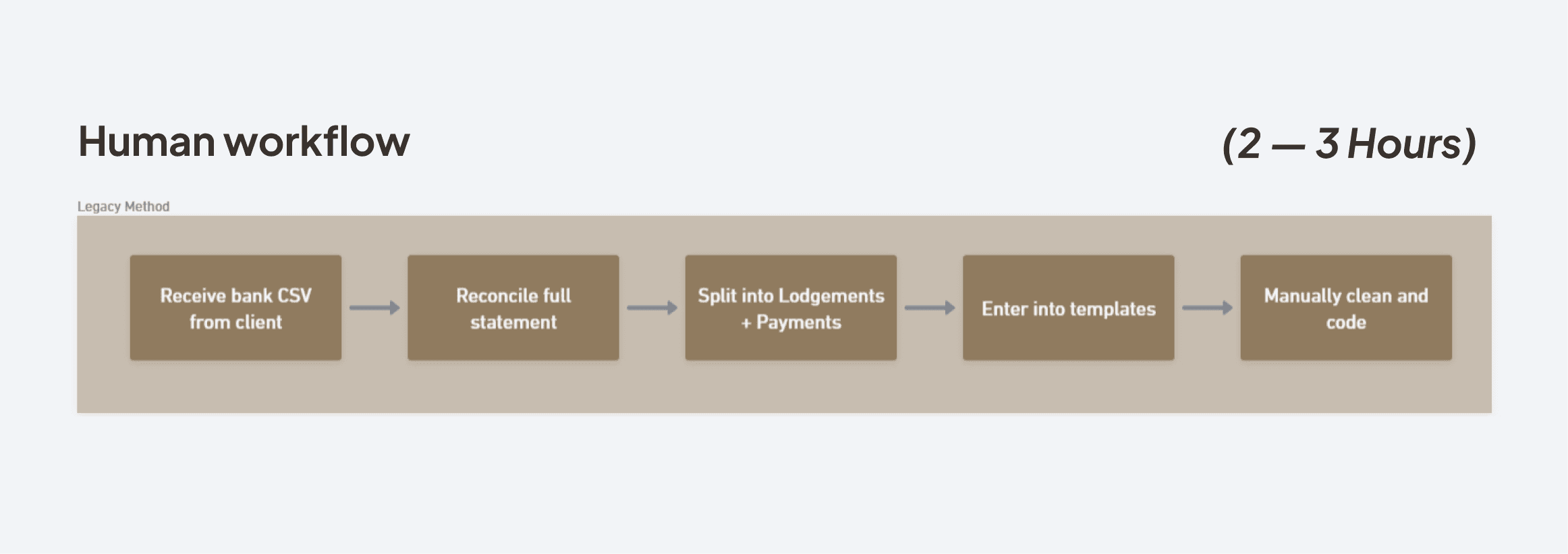
On a single client account this preparation could take two as much as two to three hours to complete. Multiply that across dozens of clients and it quickly becomes a productivity bottleneck. If we could reduce this time commitment team members could focus on higher-value tasks like data review, insight generation and client advisory.
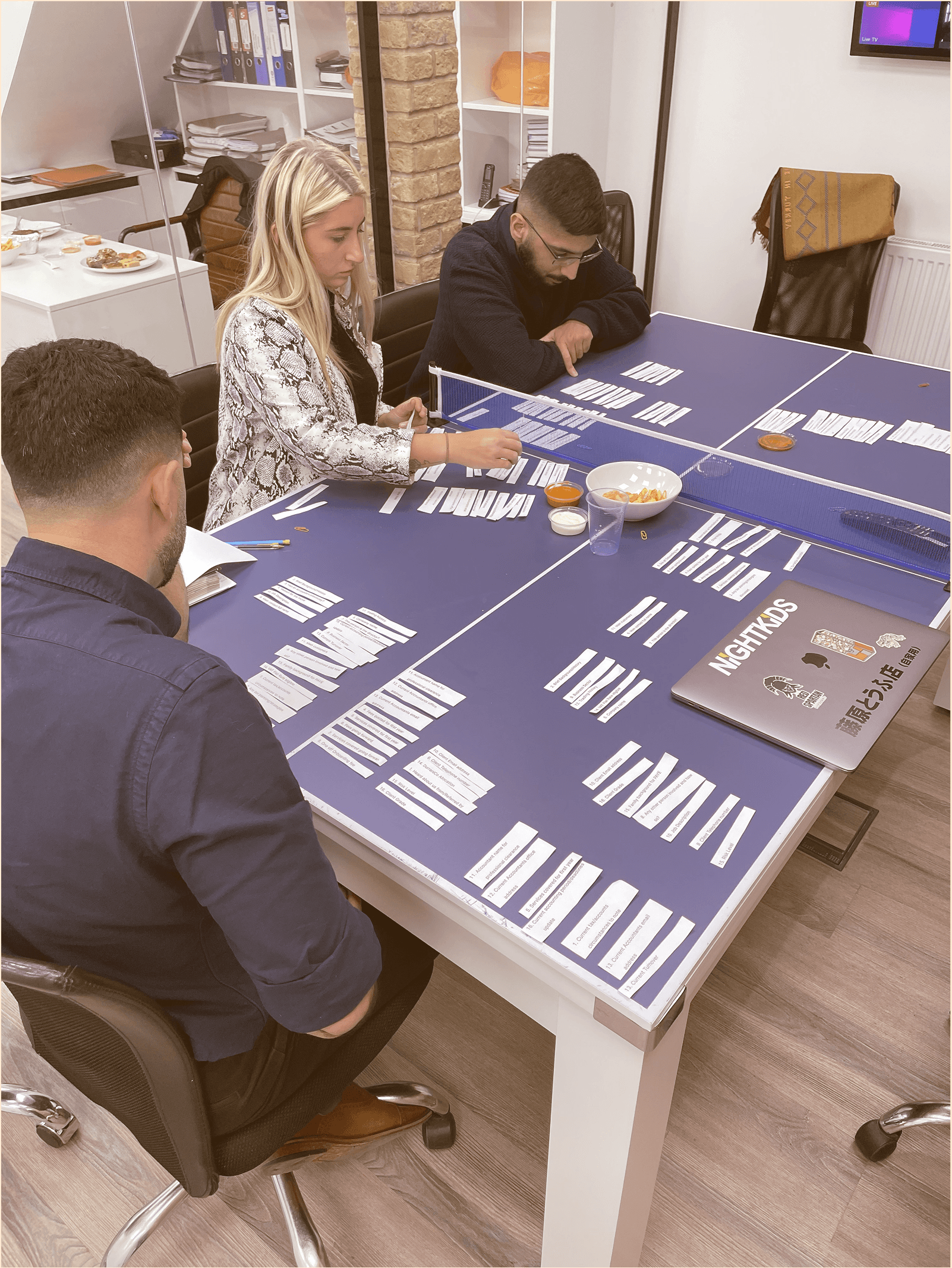
Fig 1 — Workshop to better understand the business challenges that lay ahead.
Cost efficient AI tooling — what we built?
Built entirely around tools already included in Microsoft 365 (namely the newly added Copilot AI) and a small amount of Python automation. We went with a proof of concept approach allowing us to deliver fast results at minimum cost. No costly custom code just Copilot as the core AI layer glued together with some python.
No new tool subscriptions or ongoing API licensing and/or token costs. Our solution was all about time savings not perfect automation.
Fig 2 — The legacy workflow (approx 2 - 3 hours).
The techy part — how we saved so much time?
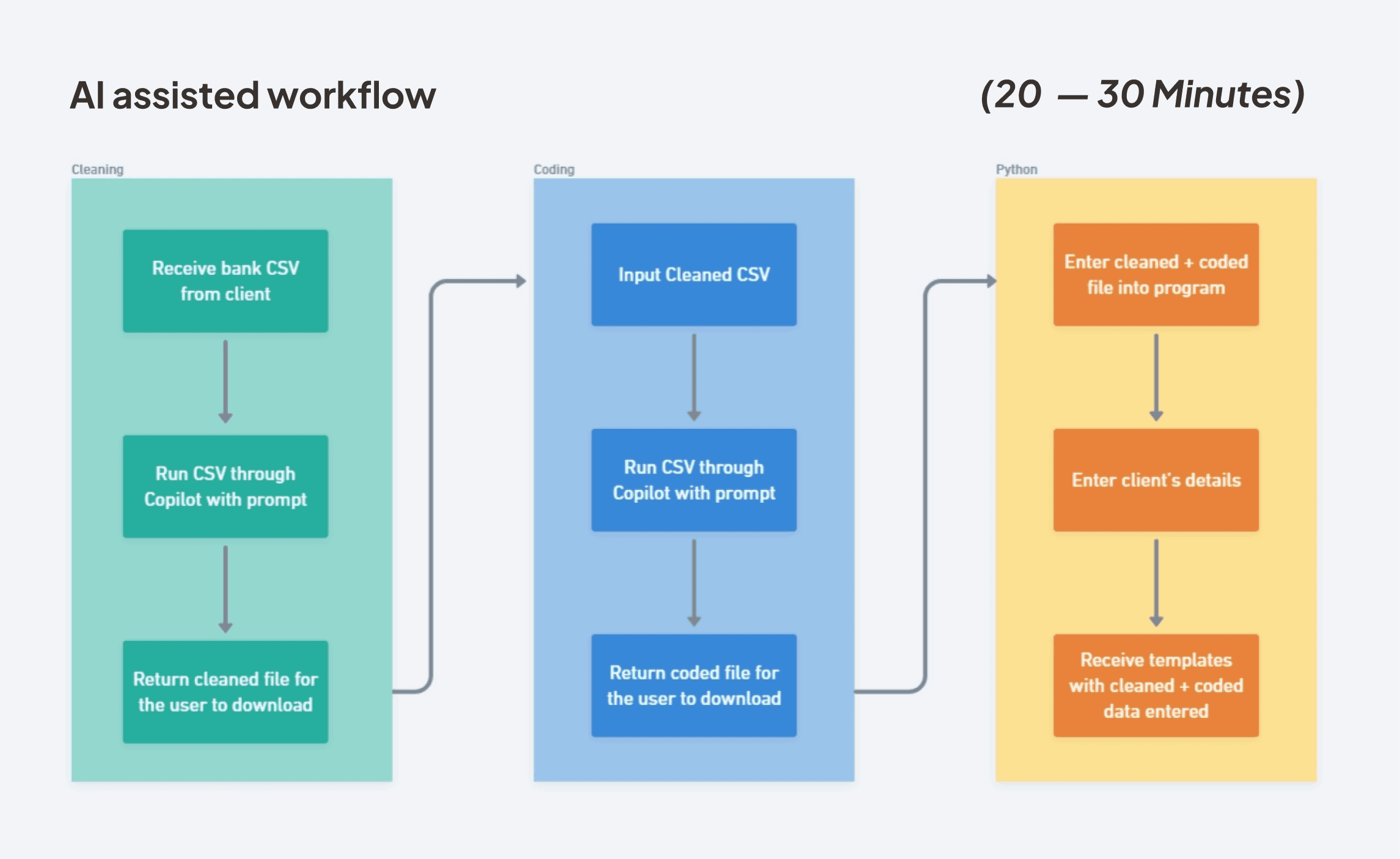
The key was breaking the bank statement preparation process into clear stages and letting AI handle the repetitive parts:
Start with a CSV bank statement.
Use AI to clean transaction descriptions.
Run a second AI step to assign accounting codes.
Use Python to format the data into templates and generate summaries.
Finish with a human review.
Separating cleaning and coding into two steps improved accuracy significantly. Instead of replacing accountants, the system gives them a partially completed dataset, so they can focus on checking and refining rather than starting from scratch.
Fig 3 — The new AI assisted workflow (approx 20 - 30 minutes).
Some limitations and things to improve.
Firstly some transaction descriptions are difficult for the AI to decipher, leading to incorrect cleaning or misclassification. General purpose AI also introduces some variability, so outputs aren’t always consistent without well structured prompts. Because of this human review is still essential. Every output needs to be checked before it’s used further. Whilst this review step is minimal it's something we want to reduce in future iterations.
Lastly there is a learning curve and training that needs to be given to the team allowing them to better understand how to use the tools and how to handle edge cases. All things we're looking to improve on over the coming months.
Do it yourself? Here's some tips to get you started.
Accuracy is the biggest challenge. Without clear rules and structured prompts, AI outputs can become unreliable so focus on clarity and accuracy with prompts early on.
Whilst the final solution is simple you will need to plan and factor in time for:
Refining prompts and workflows.
Staff training and adoption.
Testing and handling edge cases (e.g. unusual transactions).
Work arounds for tool limitations without paying for expensive custom AI models.
A fully automated system sounds ideal, but in practice it’s expensive and unnecessary for most small businesses. A hybrid approach with human oversight works far better.
Results and thoughts.
The results were immediate and significant. A typical three hour account preparation task was reduced to just 15-30 minutes — a time saving of around 75%.
More importantly, the nature of the work changed. Instead of preparing data manually, accountants now start with pre-processed information and focus on reviewing and analysing it. Which is far more enjoyable to perform.
The biggest takeaway is that the value comes from time saved, not perfect automation. Even with some errors, the workflow dramatically improves efficiency and frees up time for higher-value work.
Related